
Different applications, engineered solutions
A transformer for a cement plant and a transformer for a hospital are both called transformers. Both step voltage up or down. Both operate continuously and quietly. But the engineering decisions that determine how each one is built are responding to entirely different sets of demands, and a unit designed for one environment will underperform, and potentially fail prematurely, in the other.
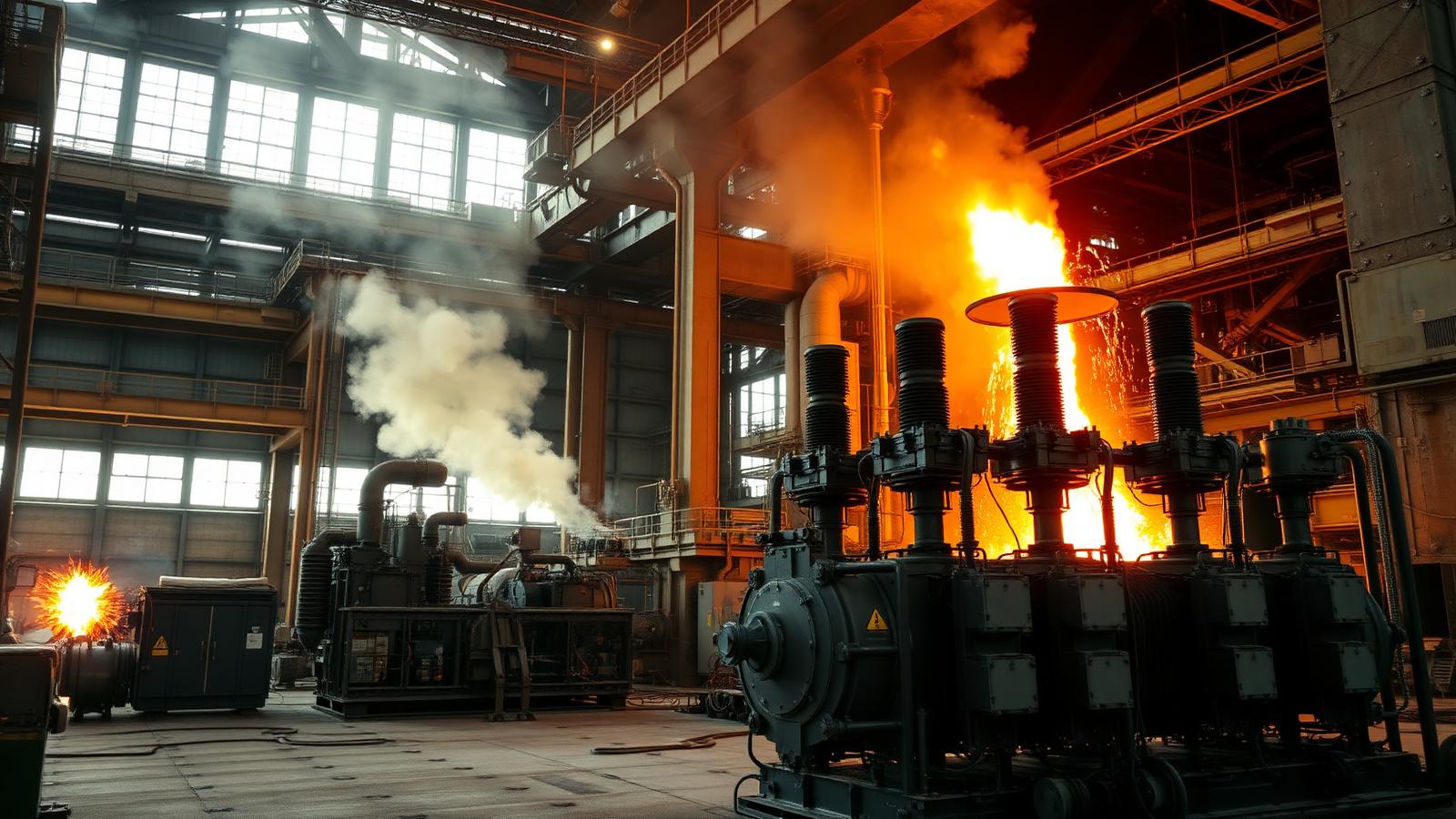
Industrial applications impose stresses on transformers that standard designs were not built to absorb. Steel plants and arc furnace operations produce harmonic-rich current waveforms that distort the load far beyond what a conventional transformer's thermal and insulation design accounts for. Running a standard transformer on a harmonic-heavy load causes it to operate hotter than its design intends, which accelerates insulation degradation and shortens its life measurably. Cement and mining facilities present different challenges: heavy motor starting currents, high ambient temperatures, and outdoor installation in environments where dust and moisture ingress are constant concerns. Each of these demands specific engineering responses, not modifications applied after the fact.
Sensitive facilities introduce a different category of requirement. Pharmaceutical and food manufacturing need tight voltage regulation and clean power because process equipment is intolerant of variation. Data centres require reliability at a level where even a brief interruption is unacceptable, and the transformer feeding them must be specified with that consequence in mind. Hospitals and critical infrastructure sites carry similar expectations. For these applications, the impedance value, the protection coordination, and the redundancy arrangement around the transformer are as important as the transformer itself.
Renewable energy has created an entirely new set of transformer requirements that the industry is still adapting to. Solar inverter duty transformers need to handle DC offset in the current and the specific harmonic content that inverter-based generation introduces. Wind energy installations operate under variable load profiles across a wide range of conditions. Standard distribution transformers placed into these applications without modification tend to underperform and age faster than their ratings suggest they should.
When specifying a transformer for any industrial application, share the load profile, not just the kVA figure. Describe the environment honestly. Ask whether the unit being offered is engineered for your application or whether it is a standard design with minor adjustments. The best transformer for your plant is the one built for exactly what your process demands.
TransVolt Takeaway
TransVolt has supplied application-specific transformers across steel, cement, pharmaceuticals, renewable energy, and infrastructure projects. Tell us what your process demands, and we will engineer a unit that fits it precisely.
Tell us what your project demands. Our engineering team will help you specify the right transformer from the start.
Connect With TransVolt