

Choosing the right transformer for the right job
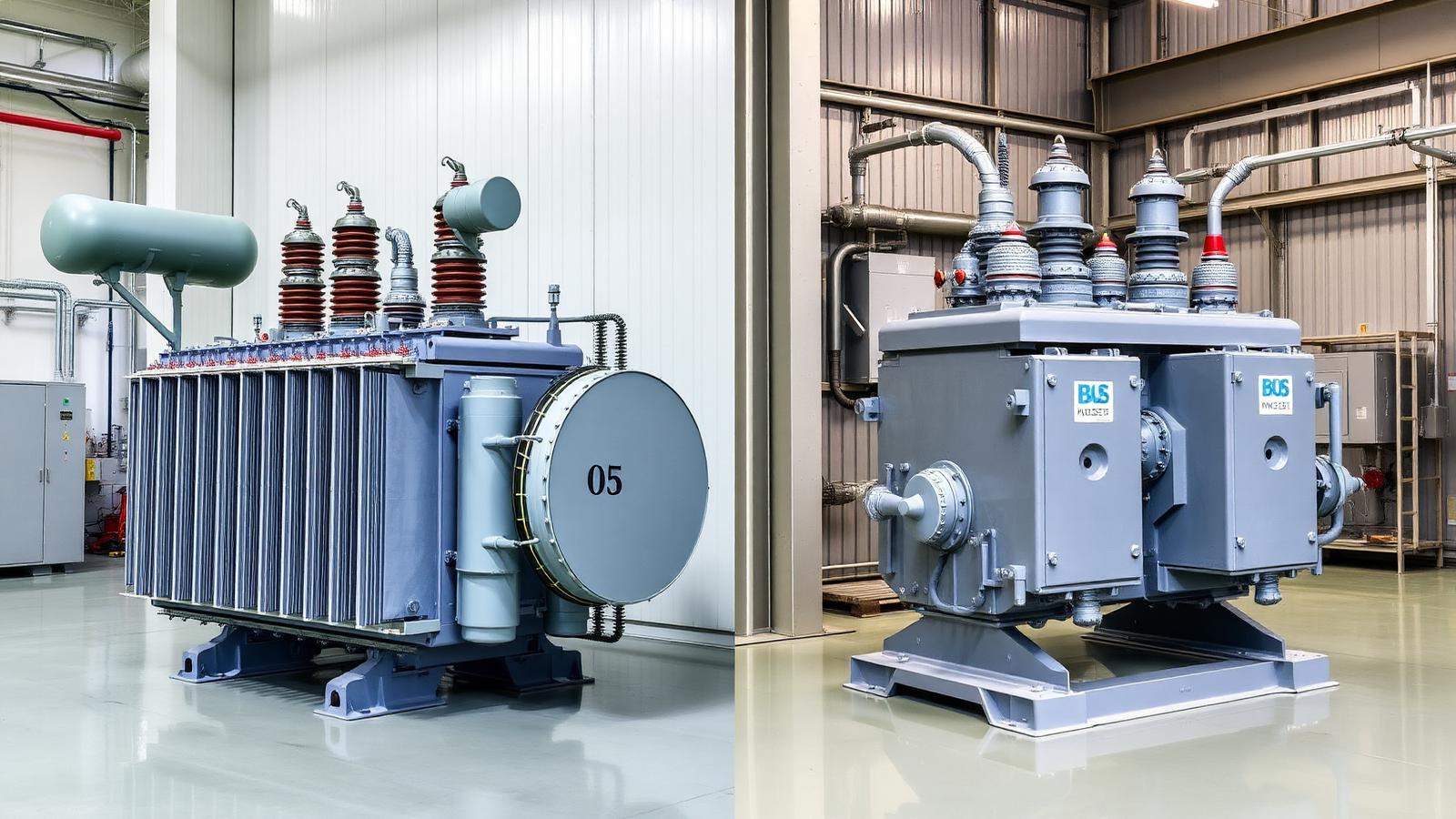
Two transformers. Same kVA rating. Same voltage class. Completely different designs, different strengths, and different risks if either one ends up in the wrong application. The choice between oil-filled and dry-type is one of the most consequential decisions in transformer procurement, and it is one that too often gets made on price or habit rather than engineering logic.
Oil-filled transformers use mineral oil as both coolant and insulating medium. The windings sit submerged in oil inside a sealed steel tank. This design has been the industry standard for well over a century because it performs exceptionally well across a wide range of ratings, voltages, and operating environments. It handles higher capacities more cost-effectively than dry type, has a proven service record spanning decades, and is well understood by maintenance teams across India. For outdoor installations, high-voltage applications, and large industrial or utility projects, oil-filled remains the right answer.
Dry-type transformers use resin-encapsulated windings and air cooling. There is no oil, which means no risk of leakage, no fire hazard from a flammable liquid, and no requirement for the containment infrastructure that oil-filled units need indoors. This makes dry-type the correct choice for indoor installations in buildings where fire risk is a regulatory or safety concern. Hospitals, commercial towers, metro stations, data centres, and pharmaceutical facilities increasingly specify dry-type not because it is better in absolute terms but because it is better suited to environments where oil simply should not be.
The decision comes down to four questions asked honestly before the specification is written. Where is the transformer going, indoors or outdoors? What voltage class and kVA rating does the application require? What fire safety regulations govern the installation site? And what does the total cost look like across the asset lifetime, not just at the point of purchase? The answers to those four questions will point clearly to one type or the other. There is no universally superior option. There is only the right transformer for your specific situation.
TransVolt Takeaway
TransVolt manufactures both oil-filled and dry-type transformers across a wide range of ratings and voltage classes. If you are unsure which type suits your project, our engineering team can help you specify correctly from the start.
Tell us what your project demands. Our engineering team will help you specify the right transformer from the start.
Connect With TransVolt