

Exploring what makes a transformer come alive
That steel tank sitting in your substation looks straightforward from the outside. A box, some fittings, a few pipes. What is inside is something else entirely. A transformer is one of the most precisely engineered objects in electrical infrastructure, and every material choice, every assembly decision, every component has a specific reason for being there.
At the heart of it is the core, built from cold-rolled grain-oriented silicon steel, known in the industry as CRGO. This is where the magnetic energy is transferred from the primary circuit to the secondary. The quality of this steel, its grade, its cutting precision, the tightness with which the laminations are stacked, determines how efficiently the transformer performs not just at commissioning but across its entire operating life. A small error in core assembly, even a few microns off tolerance, results in higher no-load losses that run every hour of every day for the next 25 years.
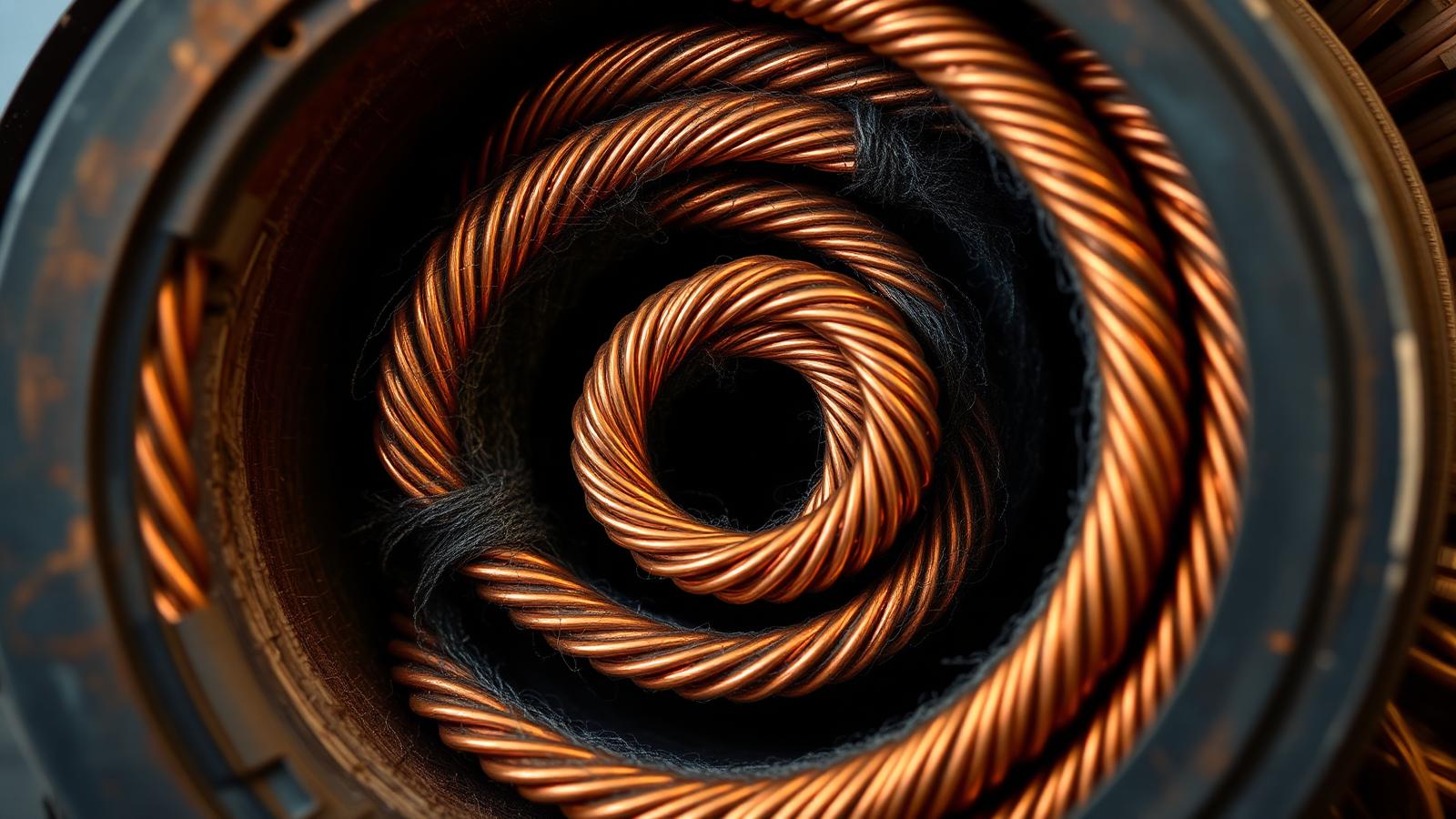
Wound around the core are the primary and secondary coils. The primary receives the incoming voltage. The secondary delivers it at the new level. The ratio between the number of turns in each winding determines the transformation ratio. This principle has not changed since Faraday. What has changed enormously is the precision and material quality with which it is executed. Whether the conductors are copper or aluminium, how tightly they are wound, how uniformly the insulation is applied between layers, these decisions shape the transformer's electrical performance and its mechanical strength under fault conditions.
Surrounding the windings is mineral oil, and this oil does far more than cool. It is also an insulating medium, providing dielectric protection across every surface inside the tank. Paper insulation wraps the conductors and works alongside the oil to create a layered barrier against electrical breakdown. The condition of this oil and paper system over time is the single most reliable indicator of how much life a transformer has remaining.
The tank itself carries what are often called accessories but are better described as sentinels. The conservator manages oil volume as it expands and contracts with temperature. The Buchholz relay detects gas accumulation that signals internal faults before they become failures. The breather filters moisture from the air that enters the conservator. The bushings carry current safely through the tank wall without leakage. Each one is quietly monitoring something, and each one will tell you when something is wrong, if you are paying attention.
TransVolt Takeaway
At TransVolt, every component inside the tank is sourced to specification and assembled with precision. We build to IS and IEC standards as a baseline, not a ceiling, because what is inside determines everything that happens outside.
Tell us what your project demands. Our engineering team will help you specify the right transformer from the start.
Connect With TransVolt