

Understanding what the numbers really mean
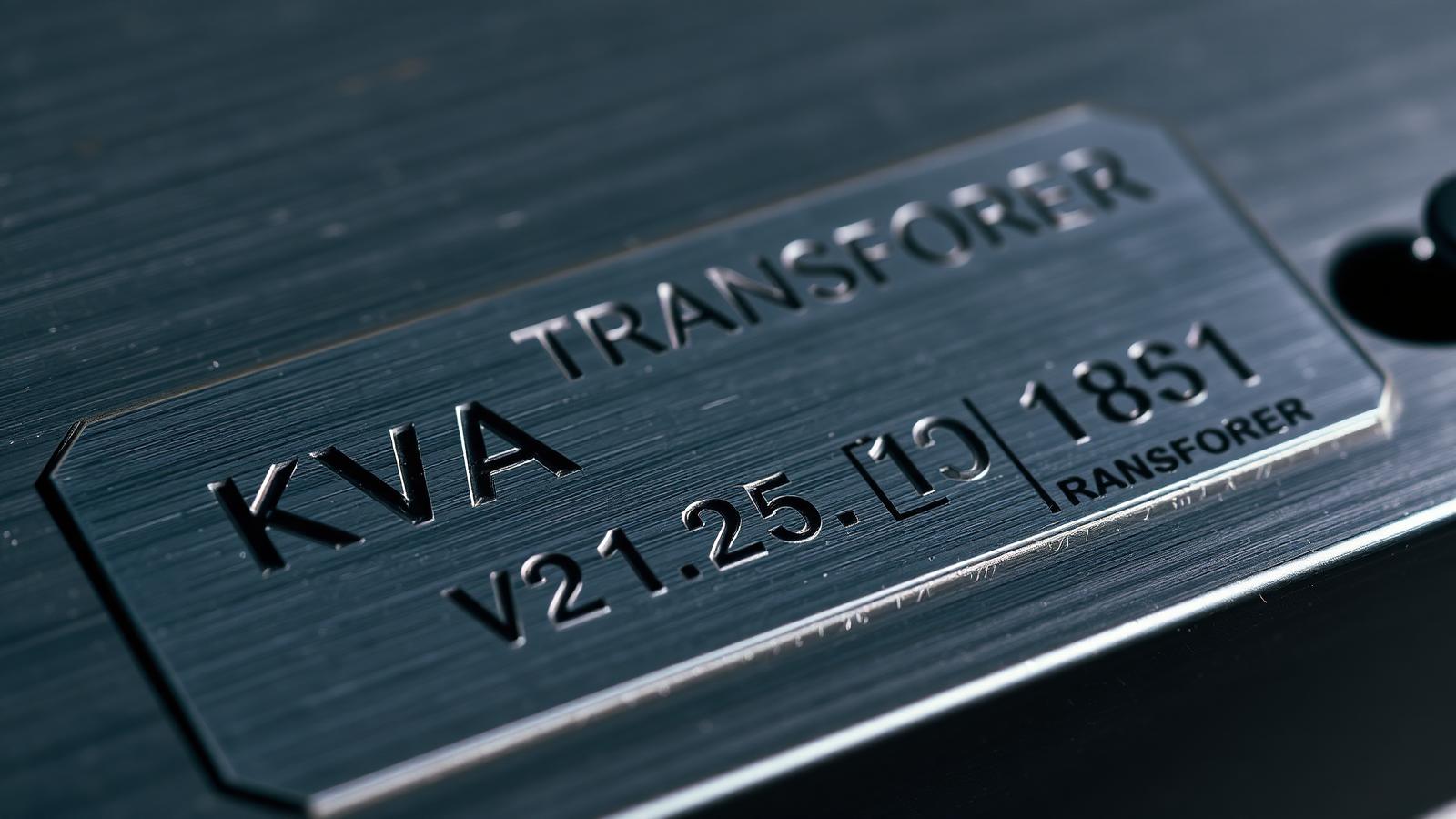
Every transformer carries a nameplate. Most people read the kVA rating, check the voltage, and move on. The nameplate carries considerably more than that. It is a compressed technical biography of the transformer, describing its capacity, its design class, its insulation level, and the conditions under which it was designed and tested. Learning to read it properly changes how you specify, how you compare vendors, and how you protect yourself from making an expensive mistake.
The kVA rating and the voltage ratio are the obvious starting points, the figures that tell you what the transformer does at a basic level. The frequency confirms 50 Hz for the Indian grid. These numbers are where the conversation usually ends for most buyers, but they are really just the beginning. The impedance percentage is the figure that most often goes unread, and it is one of the most consequential. Impedance directly determines the fault current that will flow at the secondary terminals under a short-circuit condition. A lower impedance means a higher fault current, which has direct implications for the rating and coordination of every protection device downstream. Getting this wrong does not show up immediately. It shows up when there is a fault.
The vector group, expressed as a combination like Dyn11 or YNyn0, defines the phase relationship between primary and secondary windings and whether a neutral conductor is available at the secondary. This matters for how the transformer can be connected, how it interacts with other transformers in parallel, and how the system handles unbalanced loads. Specifying the wrong vector group for a particular application or parallel configuration is not a minor inconvenience. It is a fundamental incompatibility.
The Basic Impulse Level, or BIL, tells you what voltage the insulation is designed to withstand during a lightning strike or switching surge. This must match the insulation coordination of the system the transformer is connecting to. The temperature rise figures for oil and windings define the thermal design class and confirm how much margin the unit has in warm operating environments. The IS or IEC standard reference at the bottom of the plate tells you which specification governs the design and testing, and therefore what you can actually hold the manufacturer to.
The nameplate does not just identify a transformer. It describes its character. Learn to read it, and you will never buy blind again.
TransVolt Takeaway
Every TransVolt nameplate is a commitment. The figures on it are verified by factory testing, not assumed from design calculations. If you need help interpreting a specification or comparing nameplates across vendors, our technical team is available.
Tell us what your project demands. Our engineering team will help you specify the right transformer from the start.
Connect With TransVolt